
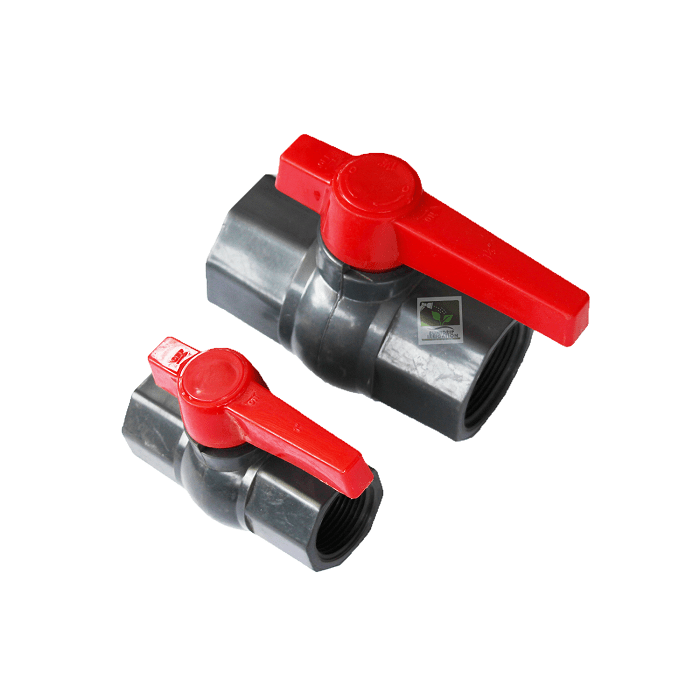
Description
Rain Hose Valve: Wing Handle and Barb Ends
Rain hose valves are inline shut-off valves that fit between two lengths of rain hose. They let you close one line while the rest of the block keeps watering. In practice, a rain hose system without valves is one big switch. You either water every bed or none of them. Eunidrip stocks barbed inline valves for 32 mm, 40 mm and 50 mm rain hose, for farms, greenhouses and nurseries across Kenya. Each one turns freely on a winged handle and seals on plain barbs, so no glue is needed.
What Is a Rain Hose Valve?
Typically, rain hose is a lightweight layflat pipe with holes punched along its length. Water runs the full line and seeps out as it goes. A rain hose valve sits inside that line and stops the flow where you place it. Then turn the handle a quarter turn and the passage closes.
Also, these valves are barbed at both ends. One barb takes the hose coming from your source, and the other takes the hose running on down the bed. Because both ends grip the pipe, the valve becomes part of the line rather than an add-on hanging off it.
Meanwhile, the blue wing on top is the working part. Its shape gives you leverage with a bare hand, which matters when you are walking a wet field in boots. Also, the wings are wide enough to feel through a glove.
How a Rain Hose Valve Works
Inside the body, a small disc sits across the water passage. Turning the wing rotates that disc. Edge-on, it blocks the bore and the line goes dry. Flat-on, water passes through untouched.
That is a butterfly action rather than a full ball valve. As a result, it suits low-pressure work. It opens and closes quickly, and it costs far less than a ball of the same bore. However, it is not meant for throttling. If you hold it half open for weeks, the disc sits in the flow and wears. Open it fully or shut it fully.
Meanwhile, the barbs do the sealing job. Each carries deep ridges that bite into the hose wall. Line pressure then pushes the pipe tighter onto them. So the joint gets stronger as you open the valve, not weaker.
Rain Hose Valve Sizes and Colour Markings
Valves are moulded to one bore each, and our rain hose comes in three sizes: 32 mm, 40 mm and 50 mm. To keep them apart on the shelf, the bodies carry coloured collars. The photo on this listing shows three valves with blue, red and green collars.
Therefore, check the colour against the size you need before you buy. Collar colour is how stockists separate the bores, and it is not a universal code. Confirm the marking with us if you are reordering, since a 40 mm barb will not seal a 32 mm hose.
| Valve bore | Suits | Best used on |
| 32 mm | 32 mm rain hose | Short beds, nursery and greenhouse rows |
| 40 mm | 40 mm rain hose | Medium field runs, potato and maize furrows |
| 50 mm | 50 mm rain hose | Long runs and blocks fed from a mainline |
Rain Hose Valve Compared with Ball Valves and Adapters
Farmers often ask whether a rain hose valve can replace a ball valve. Sometimes yes, but the two parts solve different problems.
A rain hose valve grips hose on both sides, so it lives inside a layflat line. A ball valve has threaded ports, so it belongs at the head of a line where pipe work meets thread. For a hard pipe main, use the ball valve. For a layflat lateral, use the rain hose valve. Our male adapters bridge the two worlds when you need to step from thread into hose.
Also, a valve is not a connector. If you only want to join two hose ends and never close them, buy a coupling instead. See our PE middle connectors for that job.
Why Each Rain Hose Line Should Have Its Own Valve
In practice, one valve per bed is the layout that pays for itself. Four reasons drive that.
- Different crops, different water. A bed of finishing tomatoes and a bed of new seedlings cannot share one shut-off.
- Repairs without a shutdown. Close the nearest valve, then fix a split line. The rest of the block keeps irrigating.
- Pressure control. Opening every line at once drops pressure along the mains. Stagger your watering by closing valves and running two beds at a time.
- Fertigation. You can feed one block and skip the next, which is how you avoid wasting fertiliser on a bed that does not need it.
For measured feeding, pair the layout with a drip valve manifold at the head of each bay.
How to Install a Rain Hose Valve
- First, plan the position. Put the valve where you can reach it dry, ideally at the head of the bed.
- Open the valve first. Turn it fully open before you fit anything, so the disc is out of the way.
- Cut square. Trim both hose ends flat with a sharp knife so the bores stay round.
- Warm the hose. In cold weather, dip the ends in warm water for a few seconds. A flexible pipe slides over a barb far more easily.
- Next, push both barbs home. Drive each end in until the last ridge clears the hose wall.
- Finally, test the shut. Close the valve and watch the downstream end. It should go dry, then weep nothing.
Next, mark open and closed on the handle with a permanent pen. A wing handle looks the same either way to a visitor, and that causes twice the watering you planned.
Using Rain Hose Valves Across the Whole Layout
Valves sit at the joints of a system, so they touch everything else you buy. Upstream, the irrigation pipes we stock carry water to the valve line. Downstream, the valve feeds rain hose or PVC layflat hose. Where a bore changes, a plastic reducer socket handles the step.
Inside a structure, one valve per bench is enough, and it makes a greenhouse layout easy to re-plan between seasons. Our greenhouse supplies cover the film, profiles and nets that go with it. Meanwhile, the Food and Agriculture Organization irrigation manual explains how to size a distribution line before you buy fittings at all.
Quality Features of the Valves We Sell
Every valve body is moulded in one piece, with no weld line across the barb roots. That is where a cheap valve splits first. Sun and heat make poor compound go brittle, and a brittle handle snaps the season after you install it.
In addition, the wings are moulded thick at the root. That gives the handle something to flex against, since a thin root cracks from the twist of a cold, stiff valve. Each batch is sampled on a working line before it reaches the shelf. Therefore a bad mould does not reach a farm.
Rain Hose Valves — Frequently Asked Questions
What size rain hose valve do I need?
Match the barb to the bore printed on your hose roll. That is 32 mm, 40 mm or 50 mm. Never size down and hope the seal will stretch.
Can I use a rain hose valve on a pressurised main?
Not safely. In practice these are low-pressure layflat valves with a butterfly action. For a hard main, fit a threaded ball valve at the head instead.
Will the valve leak at the barbs?
Not if you cut the hose square and push each end fully home. Leaks almost always come from a torn pipe wall or a half-seated barb.
Can I leave it half open to slow the flow?
Avoid it, because the disc sits in the stream and wears, and the flow control you gain is small. Open fully or shut fully, and slow the line with a reducer instead.
How many valves should I buy per acre?
One per bed, plus one spare for every five fitted. A seized valve mid-season costs more growing time than the whole set ever costs.
Do these valves suit fertigation?
Yes, and that is a common use. First, close the beds you are not feeding, then open them in turn. Flush the valve with clean water afterwards, since fertiliser left standing crystallises across the disc.
Where to Buy Rain Hose Valves in Kenya
Eunidrip Irrigation Systems supplies valves, hose, connectors and full drip kits from one place. So your bores match across the whole layout. We deliver countrywide, and our team can count the valves a block needs from your bed lengths before you order.
Call or WhatsApp 0724 775 516 with your hose size and the number of beds. Alternatively, use our contact page to send a layout. Tell us the bore, the bed lengths, and where your water source sits. We will quote the rest.