

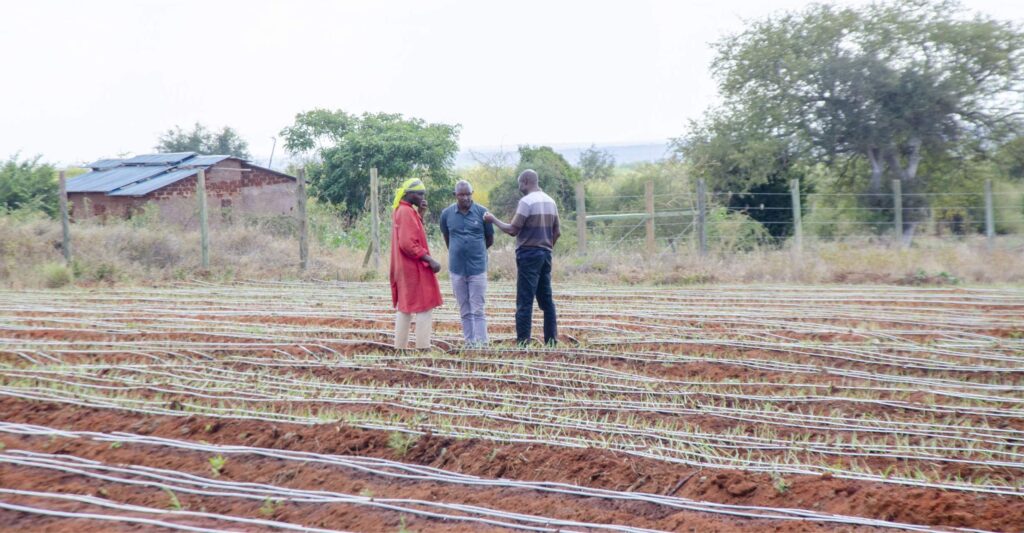
Eunidrip Irrigation Systems supplies the onion drip irrigation kit to Kenyan growers. They use it to water onions in measured, slow doses instead of by hand. Onions are sensitive to the amount of water they receive, because their roots are shallow. They need a steady and regulated supply. Too much water brings fungal disease and rot. Too little water reduces both the quality and the size of the bulb. As a working rule, onions do well on about 2.4 cm of water once per week. Therefore drip irrigation is the best way to apply that water. These parts also make up the wider onion irrigation systems on Kenyan farms, from the borehole pump to the raised tank.
Onion Drip Irrigation Kit for Sale in Kenya
For successful onion farming the right system matters. A well-designed kit delivers water straight to the root zone, so you use less water and keep soil moisture steady. This guide walks through the parts of our onion drip irrigation kit. It covers pipes, drip tape, connectors, filters and valves, and what each one does. It also covers the system that feeds the kit, from the solar pump to the last drip line. For the crop side, see our onion farming guide.
What Comes Inside an Onion Drip Irrigation Kit
Every kit starts at the water source and ends at the emitter. Between those two points sit the parts listed below, and each does a job the others cannot. The table shows where a part sits and what to look for. Because the parts are sold as one set, the fittings arrive matched to the pipe. You do not guess at sizes in the shop.
| Part | Where it sits | What to check |
|---|---|---|
| Tank or pump connector | Source end, first fitting on the line | Whether you run on gravity or on pump pressure. |
| Filter | Directly after the source | Screen for gravity, disc or sand for pressure. |
| Ball valve | Head of each line you control | One valve per zone you may close. |
| HDPE pipe | Spine of the field | Diameter and pressure rating of the roll. |
| PVC pipe | Fixed header and risers | Size, plus matching compression fittings. |
| Take-off connector | Branch off the main line | How many laterals leave the spine. |
| Drip tape | Across the beds | 15 cm emitter spacing for onion rows. |
Tank Connector for Low-Pressure Gravity Flow
Gravity kits start at the tank connector. It links the source to the rest of the line. It is also the first place where pressure is won or lost. Because a tank on a stand gives very little head, the connector must keep flow smooth rather than restrict it. Our drip starter connector carries the line out of the tank, and the filter follows it straight away. Typically a gravity kit needs no pump and no electricity. That is why it suits small beds close to a reservoir.
Water Pump Connectors for High-Pressure Flow
A pump changes the calculation. Pump connectors bridge the pump outlet to the line. The crop then receives a pressurised, steady supply instead of a shock of flow, and that shock arrives each time the pump starts. If your source is a borehole or a river, plan for higher pressure and a stronger filter. The same parts appear in the kit, but filter grade and pipe rating matter far more. For this reason we size the pump connector against the pump rather than the number of beds.
Filtration System: Screen, Disc or Sand Filter
Water quality is the second job of a drip system. The filter is the guard against contaminants. Blocked emitters are almost always a filtration failure rather than a tape failure. Use a screen filter for gravity flow. Use a disc or a sand filter for high pressure, because a pump pushes more sediment through a finer mesh. Our irrigation water filters page lists the screen and disc units we supply. Specifically, the right choice is set by your source. The guide to screen filters versus disc filters explains how to read it.
PVC Ball Valves for Each Line
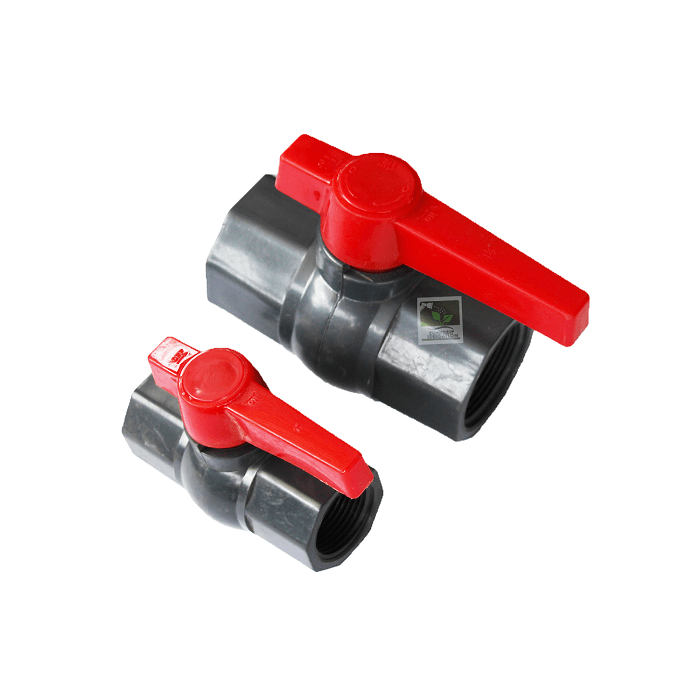
The ball valve is the part growers skip and later miss. It sits at the head of a line and lets you shut one zone off without shutting the whole farm down. That matters for onions, because you often want one bed on while another is off for weeding or for harvest. A valve also makes repair simple. Close the line, mend the tape, and open it again. We supply ball valves in the sizes used on onion main lines. Each line you may control on its own needs one valve.
HDPE Pipe and Fittings for Main and Sub Main Lines
The pipeline carries everything else. In most of our kits High-Density Polyethylene (HDPE) pipe runs the main and sub main lines. HDPE comes in rolls and it resists harsh weather. Its joints are fused or compressed rather than glued, so the line does not leak at every coupling. We stock the HDPE pipe and the matching coupling fittings. Those fittings join two runs, so spine and branches stay one system.
PVC Pipes and Fittings for Main and Sub Main Lines
Alongside HDPE, PVC pipe offers another route. Polyvinyl Chloride (PVC) is rigid, it resists corrosion, and it holds its shape in open ground. That makes it a good fit for a fixed header along the field edge. Rather than choosing by brand, choose by how the line will live. A buried line or a line that moves favours flexible HDPE. A permanent header favours PVC. Our PVC pipe page covers the sizes we keep in stock.
Drip Tape and 15 cm Emitter Spacing
The tape is the part that touches the crop. Drip tape carries water down the bed, and the emitters release it in measured doses. For onions we set emitters at 15 cm spacing. A shallow-rooted crop feeds in a narrow band, and close spacing keeps that band continuous. Specifically, spacing is the choice you make, while the tape sets the volume each emitter passes. You may be weighing tape against a rain hose layout for the same beds. Our drip tape versus rain hose comparison covers that trade-off. Meanwhile keep the tape connectors and end plugs on your order, because those are the parts that get lost in the field.
Solar Power for an Onion Drip Irrigation Kit
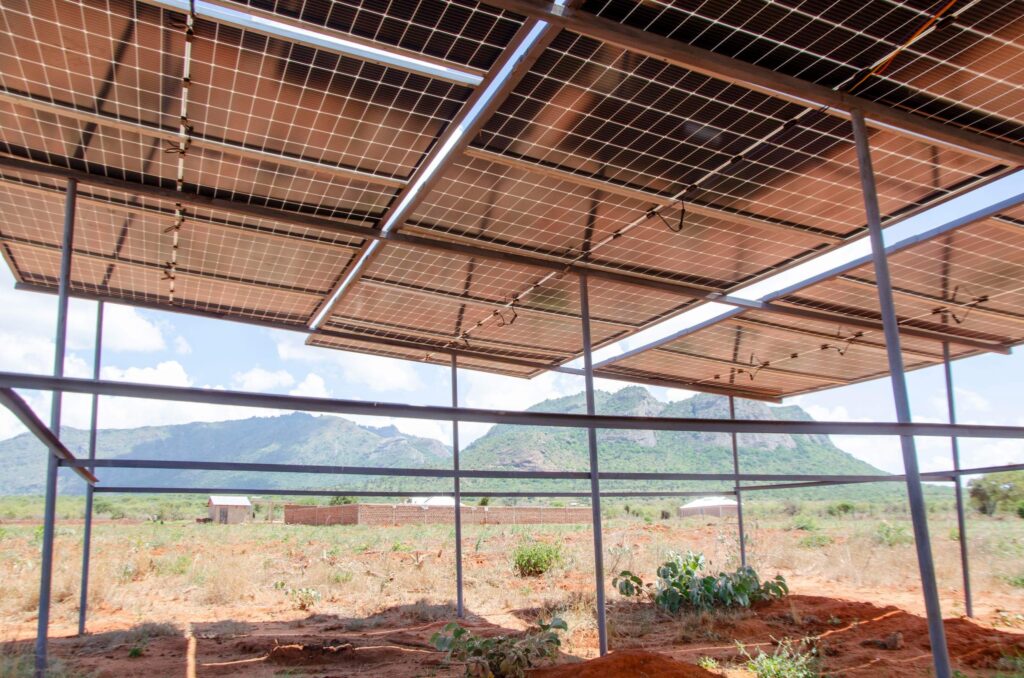
A solar pump does not have to pressurise the whole field. In practice, it can lift water into an elevated tank during the sunniest hours. The tank then feeds the onion drip irrigation kit by gravity. This two-stage design separates pumping from irrigation. As a result, the pump runs at its most efficient point, and the field receives water at a steady low pressure.
Solar pumping has become the standard power source for onion irrigation on Kenyan farms. A solar array, a pump controller, a tank, a mainline and the drip lines make up the system. For example, a grower on a borehole can pump in the morning and irrigate a block in the afternoon. That removes the need to run a diesel pump for every irrigation cycle. It also keeps the kit working when the grid is down.
Elevated Tanks for an Onion Drip Irrigation Kit Below 10 Acres
For a farm below 10 acres, an elevated tank can hold enough water for one or more irrigation blocks. The tank is filled during pumping hours and drained through the kit when the field needs water. Height creates the pressure.
However, the tank should not be raised by guesswork. The available head must cover every loss between the tank and the farthest emitter. Those losses include mainline friction, sub-main friction, fittings, valves, filters and changes in elevation. They also include the pressure the drip line needs to run. Therefore the tank height is a hydraulic decision, not a construction one. If the tank is too low, the last bed in the block runs weak.
Three Drip Lines per Onion Bed
Three drip lines per bed suit many onion layouts, but the count is not fixed. It depends on bed width, onion spacing, drip-line spacing, emitter spacing and emitter discharge. Soil type matters too, because sandy soil spreads water differently from clay. The required irrigation depth sets the run time. In practice, the goal is a wetting pattern that covers the onion root zone without watering the paths. A narrow bed may need two lines, while a wide bed may need four. For this reason, the kit supplies the tape and fittings, while the line count follows the bed design. Our team checks the bed plan before quoting.
Sizing the Mainline for an Onion Drip Irrigation Kit
Mainline size follows two answers: how much water the block needs, and how many hours are available. A field that must be watered in four hours needs a higher flow rate. The same field watered over eight hours needs less. Higher flow means higher velocity in the pipe. Higher velocity means more friction loss. In contrast, a larger pipe carries the same flow at a lower velocity and loses less pressure. That does not mean the largest pipe is always right, because over-sizing adds cost. The aim is the smallest pipe that delivers the flow within your irrigation window.
If the mainline is too small, the far end of the field runs weak. The usual symptoms are low pressure at the last bed, uneven growth and longer irrigation times. Many growers blame the pump, yet the pipe is the cause. Our HDPE and PVC ranges cover the sizes used on onion irrigation blocks.
Air Release Valves in a Gravity-Fed Onion Drip Irrigation Kit
Air collects at the high points of a pipeline. A gravity-fed onion drip irrigation kit runs on low pressure. A pocket of air can stop flow in a whole section. The symptoms are reduced flow, irregular pressure and a line that will not fill. An air release valve lets that air escape. It is fitted at the high points shown by the pipeline profile, not at fixed intervals. For example, a line may rise over a ridge and drop into the next block. It needs a valve at the crest. In practice, the field survey identifies those points before the pipe is laid. Our air release valves fit the mainline and sub-main sizes in the kit.
Reducing Turbulence in an Onion Drip Irrigation Kit Design
Water always loses some energy as it moves. The aim is to avoid losses the design can prevent. Sharp bends, sudden pipe reductions and undersized fittings all add resistance. So do unnecessary valves and a badly built manifold. In a low-pressure onion drip irrigation kit, those small losses matter more. The tank has little head to spare. Therefore keep the route straight where the ground allows. Match every fitting to the flow it carries. Size the manifold so each block receives the same pressure. Finally, flush the line after installation, because debris left in the pipe can block an emitter. Good design cannot fix a dirty line.
Designing an Onion Drip Irrigation Kit with Eunidrip
The system runs in one chain: source, pump, tank, mainline, control valve, sub-main, manifold, drip lines and crop. Every link adds a loss, and the tank must cover them all. Before we quote, we check the farm size, water source, tank elevation, irrigation hours and terrain. We also check mainline diameter, pipe length, drip-line specification and the number of blocks that run at once. Fittings, valves, air-release points and soil type complete the list. In short, we design onion irrigation systems, not just a parts list.
This is why two farms with the same acreage can need different kits. A survey costs less than a line that waters badly. Tell us your block plan and water source, and we will size the onion drip irrigation kit for your field.
Advantages of an Onion Drip Irrigation Kit on Your Onions
Drip pays for itself in five places.
- Pumping costs fall, because the system applies water slowly and only where the roots are.
- Crop health improves. The onions get the right amount of water and nutrients, so quality and quantity both hold.
- Labour costs drop. You no longer pay people to carry cans or run a hose across the beds.
- Weed growth is controlled. Water reaches the root zone and not the ground between the rows, so fewer weeds germinate.
- Fertigation becomes possible. Feeding through the line helps you avoid the harms of fertiliser overuse. Those harms include pollution of underground water, soil acidification, and a toxic build-up of metals.
Instead of buying these parts one at a time, most growers take them as a set. The fittings are already matched to the pipe.
How to Size an Onion Drip Irrigation Kit for Your Field
Four answers set the size. First, the area you intend to plant, measured in metres rather than guessed. Second, the row and plant spacing, since those set how much tape goes down. Next, the flow rate and pressure your source can hold. A borehole pump and a rooftop tank are two different systems. Then the layout of the beds, which decides where the spine runs. If any one of these is unknown, ask us to survey the field before you order. A kit sized on the wrong pressure is the commonest way to buy an expensive line that waters badly.
At Eunidrip we supply, design and install complete onion drip irrigation kits. You can order through our online shop or at our physical shop on George Morara Road, Nakuru town. In case of any inquiry, you can contact us on 0728163329.
Frequently Asked Questions About Onion Drip Irrigation Kits
What is an onion drip irrigation kit, and how does it work?
An onion drip irrigation kit is a system designed to efficiently water and irrigate onion crops. It works by delivering a controlled and precise amount of water directly to the root zone of the onions through a network of tubes, pipes, and emitters. This conserves water and ensures that the onions receive the right amount of moisture for optimal growth.
What are the benefits of using a drip irrigation kit for onions?
Drip irrigation offers several advantages for onion farming, including water conservation, reduced weed growth, improved nutrient delivery, and increased crop yield. It also minimizes soil erosion and disease spread.
Can I customize the onion drip irrigation kit to suit my farm’s specific needs?
Yes, many onion drip irrigation kits are customizable. You can adjust the layout, spacing of emitters, and water flow rates to meet the unique requirements of your onion crop and field size.
What components are typically included in an onion drip irrigation kit?
A standard kit often includes drip tape or tubing, emitters or drippers, connectors, filters, pressure regulators, stakes or supports, and a main water supply line. Some kits may also include a timer or controller for automated irrigation.
Is it cost-effective to invest in a drip irrigation kit for onions?
Yes, drip irrigation is generally cost-effective in the long run. While there is an initial investment, the improved water efficiency and increased crop yield can lead to significant cost savings and higher profits over time.
How do I determine the right size and capacity of the drip irrigation kit for my onion farm?
The size of the kit you need depends on factors like the size of your onion field, the spacing of your onion plants, and the water source’s flow rate and pressure. It’s advisable to consult with a drip irrigation specialist or supplier to determine the appropriate kit size.
What maintenance is required for an onion drip irrigation kit?
Regular maintenance includes checking and cleaning filters, inspecting and repairing damaged components, and ensuring that emitters are functioning correctly. Proper winterization is also essential to prevent freezing and damage during the offseason.
Can I use a drip irrigation kit for other crops besides onions?
Yes, drip irrigation kits are versatile and can be used for a wide range of crops, including vegetables, fruits, and flowers. They are suitable for various farming applications.