
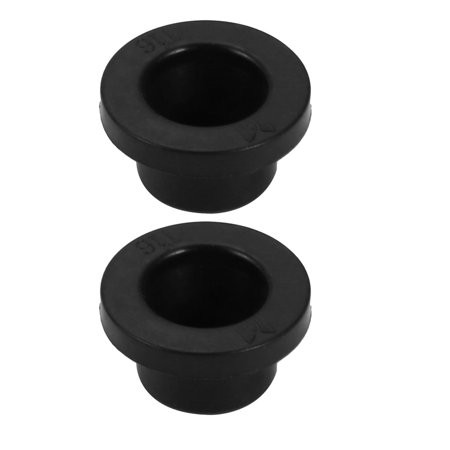
Description
Rain Hose Rubber: Seal and Coupling Rings
Rain hose rubber rings are the moulded seals that make a rain hose joint watertight. They sit between the barbed plastic fitting and the hose wall, and they fill the gap that plastic alone cannot. In practice, the hard fitting gives the joint its strength. The rubber gives it its seal. Eunidrip stocks replacement rings for 32 mm, 40 mm and 50 mm rain hose, for farms, greenhouses and nurseries across Kenya. Typically, a ring costs a fraction of the fitting it protects.
What Is a Rain Hose Rubber Ring?
Rain hose is a lightweight lay flat pipe. It is rolled, unrolled, dragged and stepped on, so its bore is rarely perfectly round. A rigid barb pushed into that oval bore leaves a flat channel along one side. Water finds that channel, and the joint drips.
A rain hose rubber ring solves that. The sleeve is flexible, so it compresses unevenly and closes the flat side of the bore. Then the plastic collar or clamp squeezes it against the hose wall, and the seal holds. Because the rubber does the sealing, the hard parts only have to do the gripping.
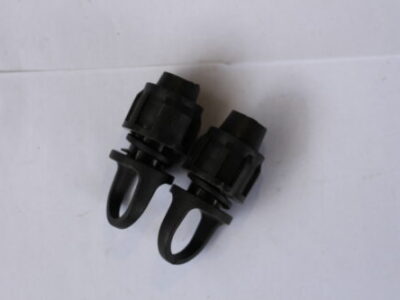
On this shop the rings are supplied loose with the barbed fittings. The photo on this listing shows two rings beside a valve, one on each side of the barb. Replace them one-for-one whenever a joint starts weeping.
Where the Rubber Sits in a Rain Hose Joint
First, slide the loose ring onto the barb before you push anything home. Next, seat it against the shoulder of the fitting, where the barb meets the body. Then drive the hose over both until the last ridge clears the pipe wall.
That order matters. However, many farmers fit the hose first and then wonder why the joint leaks. The ring cannot stretch backwards into position once the barb is buried. Also, a ring pushed part-way down the barb seals on its own edge, and that edge tears within a season.
Finally, check the joint wet. Open the valve and watch the mouth of the hose. A dry joint after ten minutes is a joint you can walk away from.
Rain Hose Rubber Sizes: 32 mm, 40 mm and 50 mm
Rings are moulded to one bore each, and our rain hose comes in three sizes. A 40 mm ring will not seal a 32 mm hose, and a 32 mm ring will not stay on a 50 mm barb. Match the ring to the size printed on your roll.
Measure if the printing has worn off. Wrap a tape around the hose, or push a barb in by hand. A correct fit needs firm pressure and a straight push. Therefore, if the ring slides on with no stretch at all, expect it to leak under pressure.
| Ring size | Suits | Common position |
| 32 mm | 32 mm rain hose | Short beds, nursery trays, greenhouse benches |
| 40 mm | 40 mm rain hose | Medium field runs and potato furrows |
| 50 mm | 50 mm rain hose | Long runs fed from a mainline |
Rain Hose Rubber Coupling Used to Join Two Hose Ends
The same rubber does a second job. Push a barbed connector into each end of a split line, then seal both joints with rings, and you have repaired a hose rather than replaced it. As a result, a cut from a hoe or a rat becomes a ten-minute fix.
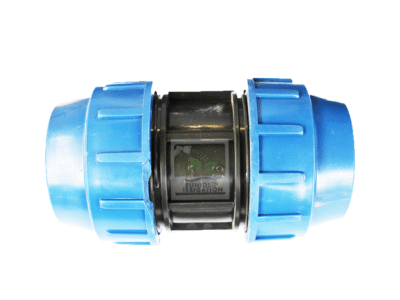
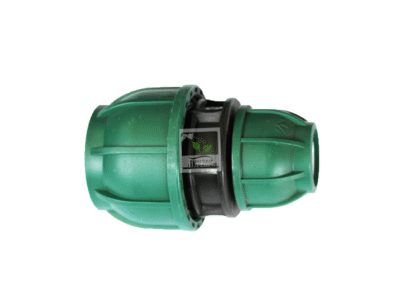
For a straight join, use a PE middle connector or a plain coupling at the centre of the run. Where the bore changes, a plastic reducer socket handles the step, and a fresh ring closes the gap on the smaller side.
Meanwhile, on a hard mainline the compression joint seals itself with a factory O-ring. Our HDPE adapters and ball valves cover that side of the system, where thread and a compression sleeve do the work instead of a loose rubber ring.
Signs a Rain Hose Rubber Ring Needs Replacing
Rubber is the wearing part in the joint, so treat it as a consumable. Four signs tell you it has finished.
- A steady drip that tightening does not stop. The ring has taken a permanent set and no longer springs back.
- Small cracks around the outer edge. Sun damage has dried out the compound.
- A swollen, soft ring that squashes flat. Typically this follows fertigation, since strong feed can attack some compounds.
- A ring that has slid down the barb. The hose has moved it, and the lip is now cutting into itself. Replace it rather than push it back.
In addition, replace every ring whenever you move a line to a new bed. Rings are the cheapest part of the layout, and a dry season of repairs costs more than a bag of new ones.
How to Fit a Rain Hose Rubber Ring
- Cut square. Trim the hose end flat with a sharp knife so the bore stays round.
- Warm the hose. In cold weather, dip the end in warm water for a few seconds. A flexible pipe slides over a barb far more easily.
- Thread the ring first. Slide it onto the barb and seat it against the shoulder.
- Push and turn. Drive the hose on with a half-turn as you go, so the ring is not dragged out of place.
- Test open. Run the line and inspect the joint before you cover anything with soil.
- Anchor the end. Peg or bury the last metre so the weight of a full hose cannot lever the joint apart.
Next, keep spares on the farm rather than in the shop. One failed ring stops a whole line, and the part costs less than an hour of walking to town.
Storing Spare Rings So They Last
Rubber ages in storage, and it ages fastest in the wrong place. Keep spare rings in a sealed bag, in the shade, away from heat. Do not leave them on a dashboard or in a metal shed where the sun reaches. Light and heat are what turn a flexible ring into a brittle one.
Also, keep them away from fuel and oil. Petrol and oil attack the compound, and a ring that has been lying in a jerrycan will swell and fail within weeks. Store them in the same box as your spare fittings, and they will keep for years.
Quality Features of the Rubber We Supply
Every ring we list is moulded to a wall thickness that matches its barb. That matters because a thin ring tears on the first ridge, and a thick one cannot compress enough to seal. Each batch is fitted to a working line and pressurised before it reaches the shelf. Therefore a bad batch does not reach a farm.
The irrigation pipes we stock feed these joints, and the same rings suit PVC layflat hose where the bore matches. Meanwhile, the Food and Agriculture Organization irrigation manual explains how to size a distribution line before you buy fittings at all.
Rain Hose Rubber — Frequently Asked Questions
What size rain hose rubber ring do I need?
Match the ring to the bore printed on your hose roll. That is 32 mm, 40 mm or 50 mm. Never size down and hope the rubber will stretch.
Why does my joint still leak with a new ring?
Usually the hose end is not cut square, or the ring was fitted after the barb. Cut an inch off the end, then refit in the right order.
Can I reuse an old ring?
Only if it springs back when you squeeze it. If the ring holds the flattened shape of the joint, it has taken a set and will leak again.
Do I need a clamp as well as the rubber?
No, not on a healthy hose. Instead, use a clamp where a hose has been crushed flat in storage and the bore will not close around the barb.
How many rings should I buy per acre?
Count every joint, then add one spare for every three. Ends and valves are the joints that get disturbed most, so they use the most rings.
Will fertigation damage the rubber?
It can, over time. Flush the line with clean water after every feed, and inspect the rings at the end of the season. Swollen rings go first.
Where to Buy Rain Hose Rubber Rings in Kenya
Eunidrip Irrigation Systems supplies rings, fittings, hose, valves and full drip kits from one place. So your sizes match across the whole layout. We deliver countrywide, and our team can count the joints a block needs from your bed lengths before you order.
Call or WhatsApp 0724 775 516 with your hose size and the number of joints. Alternatively, use our contact page to send a layout. Tell us the bore, the bed lengths, and where your water source sits. We will quote the rest.