
Description
A chisel plough rips deep into the soil without turning it over. Eunidrip stocks this mounted unit in Nakuru, and the price is on request. Quotes are negotiable, so ask for one before you order.
The frame carries rigid shanks with narrow, double-ended points. Because the points stir the soil instead of inverting it, crop residue stays on the surface. That single behaviour is the reason this implement earns its place in low-till farming.
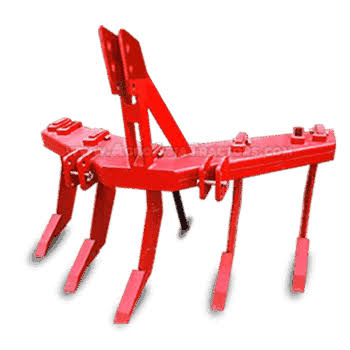
What a chisel plough does in the soil
Each shank cuts a narrow slot and lifts the soil column above it. The lift shatters the plough pan, so water and roots move down again. Air follows the same cracks, therefore the root zone breathes after a pass. Roots then reach moisture and nutrients below the pan, therefore crops hold on in dry weeks.
Surface residue is left where it fell. As a result, rain lands on cover instead of bare soil, and erosion drops. Conservation-tillage references group this tool with the subsoiler family, although farmers here know it as a chisel plough.
Depth separates the classes. Surface ploughs work at 15 cm to 20 cm, while subsoiler-class tools reach 30 cm to 40 cm. Heavy units disrupt hardpan down to 60 cm, therefore match the unit to the pan you must break.
Hardpan is the target. Years of shallow ploughing press a dense layer under the tilth, and roots stop at it. A chisel plough opens that layer from below, while a disc or mouldboard pass only reworks the top.
Surface crusts seal bare soil after heavy rain. Because the chisel pass leaves cover and open slots, water infiltrates instead of running off. Seedlings therefore emerge through a broken crust, not a sealed one.
Chisel plough benefits over disc and mouldboard ploughs
Inversion is the difference. A mouldboard plough buries residue, and a disc plough chops and mixes it. The chisel plough does neither, so the surface keeps its cover. The points also cut weed roots below the surface, therefore perennial weeds lose their anchor.
Fuel and time follow the same logic. Because one pass loosens instead of pulverising, fewer passes are needed before planting. In addition, the loose slot stores rain where it falls.
Choose the implement by the job, not by habit. For a clean inverted seedbed, see our disc plough and mouldboard plough listings. For breaking compaction under an existing seedbed, the chisel plough is the right tool.
Chisel plough parts and what to inspect
The unit is simple, which is why it lasts. Still, every part below carries load, so inspect each one before you pay.
| Part | Job | What to inspect |
|---|---|---|
| Toolbar frame | Holds every shank in line | Welds and bolt holes for cracks or elongation |
| Rigid shanks | Carry the point into the hardpan | Straightness, clamp bolts, wear at the tip seat |
| Double-ended points | Cut and lift the soil column | Both edges sharp; flip before either edge rounds |
| Headstock mast | Couples to the tractor 3-point linkage | Pin bores round, lynchpin present |
| Grease points | Keep pivots and bearings free | Nipples clear, grease present after 50 hours |
Points are the wearing part, therefore budget for spares with the unit. A rounded point rides over the pan instead of cutting it, so the whole pass wastes fuel.
How to set and run a chisel plough
Start shallow, then add depth on a second pass. First set the points just under the pan, because a full-depth first pass overloads the tractor. Work at friable moisture, since wet soil smears and dry soil powders.
Shank spacing sets the finish. Close spacing shatters the whole width, while wide spacing leaves ribs between slots. For a full seedbed rip, choose close spacing; for strip ripping under rows, wide spacing saves fuel.
Match the tractor to the shank count before you buy. Our Zoomlion tractor listing shows the mounted range we pair with implements like this. Ask for the pairing in the same quote, so the linkage and the hydraulics arrive matched.
Drive straight and lift before you turn. Never turn or reverse with the shanks engaged, because side load bends them. Lower the unit slowly at the headland, then open the throttle to working speed.
After the pass, check the slot instead of the surface. If the soil lifted in slabs, the pan is still intact, therefore run a second pass at the same depth. If roots and worm channels show in the slot wall, the job is done.
For the full seedbed sequence that follows ripping, our corporate team covers land preparation for drip irrigation; this page covers the implement itself.
Chisel plough maintenance checklist
Maintenance is short because the unit has few moving parts. Grease every pivot after 50 hours of work, and tighten every nut and bolt at the same stop. Because soil enters worn nipples, replace a blocked nipple immediately instead of forcing grease.
- Check point edges each day; flip or replace before they round.
- Inspect shank clamp bolts for stretch, since a loose shank walks in its seat.
- Keep the headstock pin bores round and the lynchpin locked.
- Coat bare metal with used oil in the slack season, therefore rust never starts.
- Open any bearing hub, wash it with diesel, then repack with fresh grease and a new seal.
Store the unit lowered on blocks, not hanging on the linkage. As a result, the hydraulics rest and the points stay off wet ground.
Buying a chisel plough from Eunidrip in Nakuru
The shop sits in Nakuru Town Center, opposite the County Assembly and next to Medicross Hospital along George Morara road. Visit with your tractor details, because the quote follows the shank count and the linkage. Delivery runs countrywide, and the price is on request until the quote is written.
Eunidrip also supplies chaff cutters, planters, sprayers, hay balers, greenhouses, biogas and poultry equipment. Our chaff cutter for sale in Kenya listing shows the same quote-and-delivery route. Therefore one supplier can carry the whole tillage and feed chain.
Prices are negotiable for small and medium farms, so bring your acreage and your tractor model to the counter. The quote then names the unit, the spares and the delivery county in one line.
Frequently Asked Questions
Does a chisel plough turn the soil over?
No. The points lift and shatter the soil column, therefore residue stays on top. Inversion is the job of a mouldboard plough, not this implement.
What soil condition suits a chisel plough pass?
Friable moisture, because wet soil smears the slot and dry soil powders. Squeeze a handful: if it crumbles after a light press, the ground is ready.
How deep should the first pass run?
Just under the pan, then deeper on a second pass if slabs still lift. The class works at 30 cm to 40 cm, therefore add depth in steps instead of one full-depth run.
How often should the unit be greased?
Every 50 hours of work, and again after a wash-down, because water displaces grease. Tighten every nut and bolt at the same stop.
Can any tractor pull this chisel plough?
Match horsepower to the shank count and the soil, therefore ask for the pairing in the quote. A mounted unit also needs a matching three-point linkage and lift capacity.
How is the price set?
The price is on request, since each quote follows the shank count, the spares and the delivery county. Quotes are negotiable, so ask before you order.