

Micro sprinklers for avocados sit between a dripper and a full sprinkler. A dripper wets one point at the root zone. A micro sprinkler throws water across a circle of soil around the tree. Avocado feeds from shallow roots that spread wide, so that wider patch matters most on light soil.
This page covers the price, the layout, the soil question and the maintenance. It also says where drip still wins, because a shop page that pretends otherwise costs a farmer a season.
Why Micro Sprinklers for Avocados
An avocado root system is shallow and wide. Most of the feeding roots sit near the surface and spread past the canopy. A single dripper wets a narrow bulb under one point. Micro sprinklers for avocados spread the same dose over a wider circle, which puts water where those roots actually are.
- Wider wetting. Water lands across a circle of soil, not a single point.
- Light soils. Sand drains fast, and a wider patch holds moisture longer than a narrow bulb.
- Faster establishment. Young trees root outward quickly when the wetted band is wide.
- Easy inspection. You can see the spray pattern from the end of the row.
- One part number. A single head does the work that two or three drippers would share.
Micro Sprinklers for Avocados in Kenya: What the Shop Carries
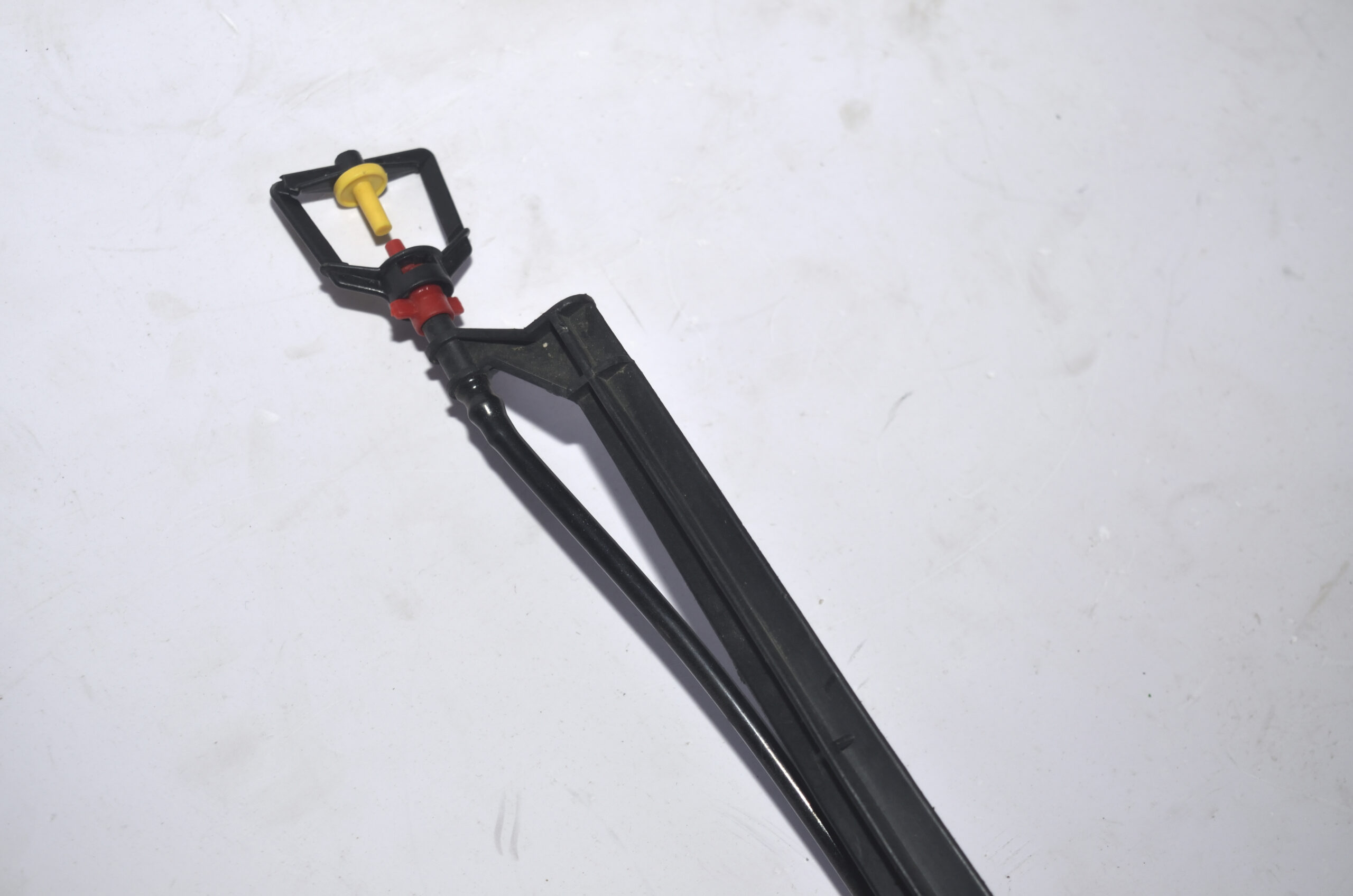
The Eunidrip shop sells one model, listed simply as micro sprinkler, SKU EU0001. It costs KSh 100 to 150 a head. The inlet comes in 1/2 inch or 3/4 inch, and the body in black or red. The standard head throws a full 360 degree circle. A second version has an adjustable arc from 30 to 330 degrees.
In practice, the choice comes down to the block shape. A full circle suits a tree standing on its own. The adjustable arc suits a row where the spray must stop short of a path, a fence or the next block. Both fit the same stake, so the head sits at the height you set once and keeps it.
Where Micro Sprinklers for Avocados Beat Drip
The comparison is not close on sandy ground. A dripper pushes water into a bulb that drains away fast on sand. A micro sprinklers for avocados wets a much wider circle, so the tree draws from a larger reserve between cycles. Consequently, young trees in sand establish faster under a spray head.
| Question | Drip | Micro sprinkler for avocados |
|---|---|---|
| Wetted area | One point per dripper | A circle around each head |
| Best soil | Loam and clay loam | Sand and light loam |
| Young trees | Roots spread slowly | Roots follow the wide band |
| Weed band | Narrow strip | Wider, so mulch or mow |
| Canopy | Stays dry | Wet if the spray clears it |
| Inspection | Dig or feel the soil | See the pattern from the row |
Moreover, there is a second advantage that farmers notice late. A blocked dripper is silent. A blocked micro sprinkler shows a thin jet or a dry patch, so the owner spots it on a walk. Meanwhile, the filter catches most of the grit that would stop either one.
Where Drip Still Wins
Drip keeps the canopy and the fruit dry. Micro sprinklers wet leaves whenever the spray rises above the skirt, and avocado is prone to root and fruit rots in humid conditions. For a site with a history of fungal trouble, a drip line stays the safer choice. The avocado drip irrigation in Kenya guide sets out that case in full.
Also, a mature orchard on heavy soil already runs well on drip. Replacing working lines to gain a wider wetted band is rarely worth the money. Upgrade the emitters, keep the pipe, and spend the difference on mulch.
Choosing an Inlet Size and an Arc
First, match the inlet to the lateral. A 1/2 inch head sits on a thin lateral that serves one row. A 3/4 inch head takes a heavier branch and is the better fit where the row runs long. Then set the arc. The full circle covers a free-standing tree. Trim the arc where the spray would soak a road, a shed or a neighbouring crop.
Pressure decides the throw. Two heads on the same lateral behave alike only if the pressure at each one is alike. Specifically, a regulator at the head of every zone is the cheap way to guarantee that. Without it, the last head on a long row throws a shorter circle and that tree dries out first.
Placement Under the Canopy
Micro sprinklers for avocados need the head set below the lowest branch, not above it. Spray that clears the canopy lands on leaves and fruit and starts the rot cycle described above. Keep the wetted circle off the trunk as well, since a soaked collar is the entry point for the soil-borne rots that kill young trees.
One head per tree is the standard layout at planting. As the canopy grows, either raise the head on a taller stake or add a second head on the opposite side. Typically, a mature tree in a wide spacing ends up with two heads facing each other, which wets a full ring without soaking the stem.
Micro Sprinklers for Avocados in Sandy Soil
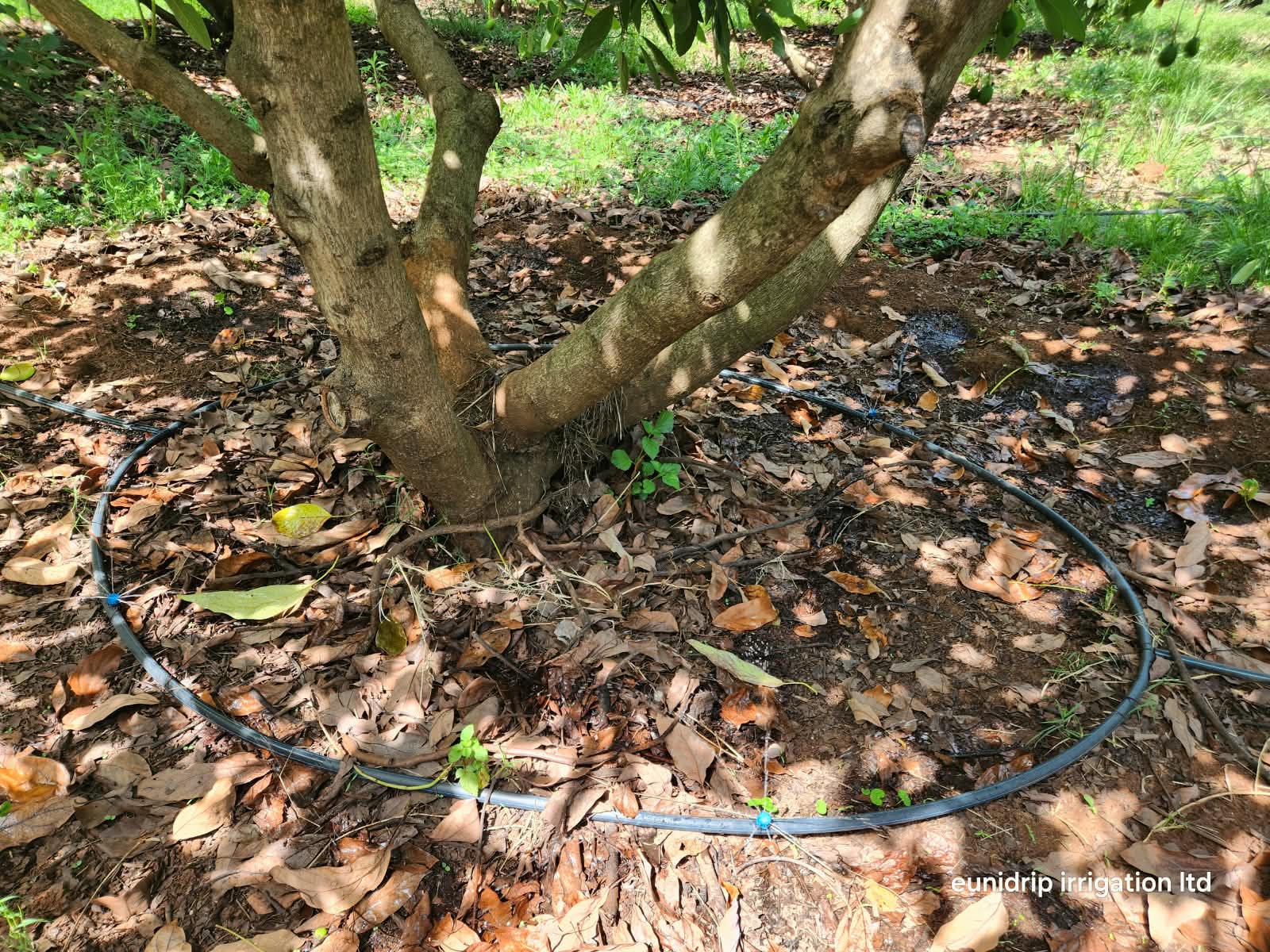
Sand is the case that sells the system. Water moves down and sideways fast, so a narrow bulb under a dripper leaves the outer roots dry. Micro sprinklers for avocados wet that outer band directly, and the tree feeds across a wider front.
Also, run times shorten on sand. Because the wetted area is larger, the same volume reaches more roots, so the cycle can be shorter and more frequent. For example, three short runs a week keep a young tree steadier than one long soak that drains past the root zone. The crop water requirement in the FAO irrigation and drainage paper 56 is the reference for sizing that cycle.
Pressure, Filtration and the Water Source
Micro sprinklers for avocados have a wider opening than a dripper, so it passes grit that would stop a drip emitter. That does not remove the need for filtration. A screen filter at the head of the block catches the debris that would block a nozzle, and it is quicker to clean than a nozzle is to replace. The shop lists irrigation water filters in the same section as the heads.
Therefore, clean the filter on a schedule, not when the pressure drops. A dirty screen steals pressure before it reaches the block, and a low-pressure head throws a short circle that looks like a design fault. Check the screen first, then the nozzle.
Micro Sprinklers for Avocados: Cost in Kenya
For micro sprinklers for avocados, the head is the cheapest part of the job. At KSh 100 to 150 each, a 100-tree block spends KSh 10,000 to 15,000 on heads. Pipe, filter, valves, stakes and labour usually cost more than that. Anyone quoting a total per acre should show you which of those lines they have counted.
| Item | What drives it |
|---|---|
| Heads | KSh 100 to 150 each, one per tree at planting |
| Laterals and main | Row length, block size, inlet size |
| Filter and valves | Water source and number of zones |
| Stakes | Height you want the head above the soil |
| Labour | Terrain and trenching |
Replacing an old block is cheaper than a new one. If the main, filter and valves are sound, the work becomes new laterals and heads. Similarly, a zoned layout can be converted one section at a time, which spreads the cost across two or three seasons.
Installation in Five Steps
Therefore, every block runs through the same five stages. Skipping one shows up later as a dry tree or a wet trunk.
- Survey. Map the slope, soil, water source and tree spacing.
- Design. Size the main and laterals, pick the inlet and arc, and divide the block into zones.
- Head works. Fit the pump, filter, regulator and valves, then flush the lines before any head goes on.
- Set the heads. Stake each head at the chosen height, set the arc away from the trunk, and run a full cycle to check the pattern.
- Hand over. Show the owner how to clean the filter, set the timer and spot a blocked nozzle.
Maintenance
In practice, maintenance is short and cheap when it is regular. Flush the laterals at the start of each dry season. Clean the filter screen whenever it loads, and keep a spare set of nozzles on the farm. Moreover, walk the block once a month and look for a head that throws short or wide.
Replace worn nozzles rather than stretching them. A worn nozzle passes more water than its neighbours, so one tree gets soaked while the rest run lean. That is the commonest fault in a block that is five years old, and it is invisible until the pattern is watched.
Micro Sprinklers for Avocados: What to Ask a Supplier
Specifically, five questions separate a supplier who has installed a block from one who has only sold a box.
- What flow does the head deliver at the pressure on my site?
- Which inlet fits the lateral you are quoting?
- Can I get spare nozzles for this head in a year?
- What filter do you recommend for my water source?
- Will the layout still work when the canopy doubles?
Then compare answers. A quote that names the head, the inlet, the filter and the zone count is a plan. A quote that gives one figure per acre is a guess. The irrigation equipment supplier page lists what the shop stocks, and the micro sprinkler irrigation article explains how the heads work in general.
Micro Sprinklers for Avocados: Frequently Asked Questions
How many heads does one avocado tree need?
One at planting. As the canopy widens, add a second on the opposite side so the whole ring under the tree is wetted.
Do micro sprinklers for avocados clog?
Less than drippers, because the opening is wider. They still need a screen filter, and the nozzle needs an occasional clean.
Can I convert an existing drip orchard?
Often, yes. Keep the main, filter and valves, then swap the laterals and heads a zone at a time. Check that the pump and filter can handle the higher flow first.
Will they wet the leaves?
Only if the spray clears the canopy. Keep the head under the skirt, angle the arc away from the trunk, and the leaves stay dry.
What does a block cost?
Heads run KSh 100 to 150 each, so 100 trees cost KSh 10,000 to 15,000 in heads. Pipe, filter, valves, stakes and labour sit on top, and a site visit is the only way to price those.
How long do the heads last?
Several seasons of continuous use when the water is filtered. Nozzles wear first, and they are the part to keep spare.
A site visit starts with three things. Send the block size, the farm location and a picture of the water source using our contact page. Countrywide delivery takes 24 to 48 hours once the order is confirmed.