
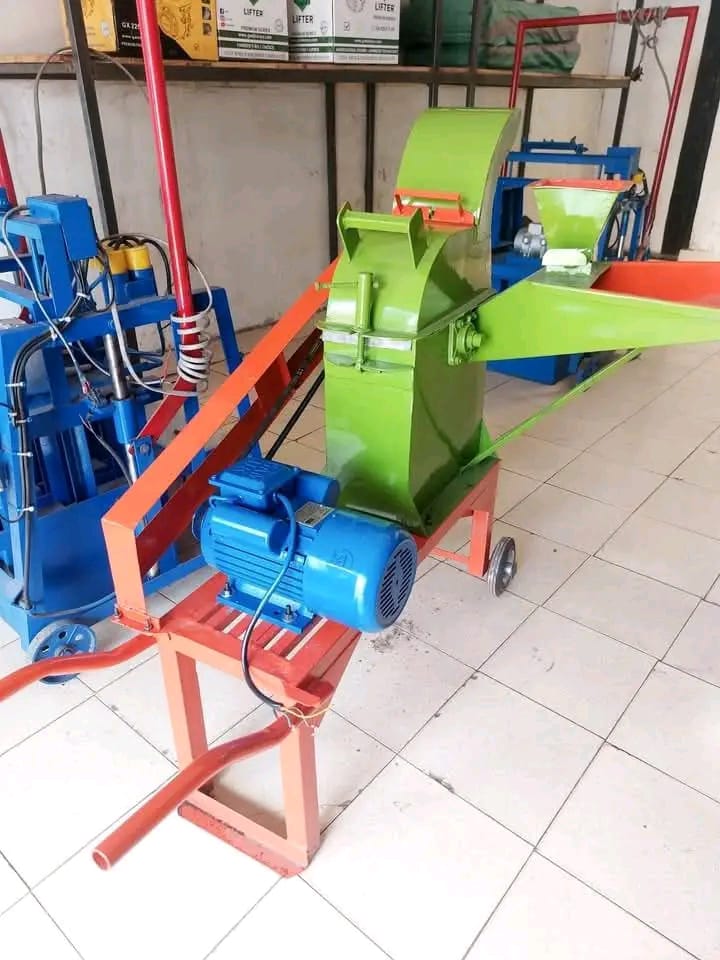
Description
Electric Powered Feed Chopper for Sale in Kenya.
Electricity has made it possible for farmers to operate agricultural machinery with greater convenience and control. In livestock farming, one of the useful applications is mechanised fodder preparation. An electric powered feed chopper provides a practical way of converting harvested grass and other suitable forage into manageable pieces without relying on manual chopping.
This machine uses an electric motor to drive its cutting mechanism. Once connected to a compatible electricity supply, the motor rotates the cutting assembly, allowing the operator to process fodder through the feeding inlet.
Unlike machines that depend on fuel-powered engines, the electric version draws its operating power directly from an electrical connection. This makes it suitable for farms, dairy units and agricultural establishments with reliable electricity.
The machine retains the same main chopping body, feeding section and cutting arrangement, while the power unit is an electric motor. This allows farmers to choose an electric configuration without changing the fundamental fodder-processing design.
5HP Electric Feed Chopper
The 5HP electric powered feed chopper is an option for farmers looking for a motor-driven fodder preparation machine for regular farm use.
Its motor provides the mechanical power required to operate the cutting assembly, making it suitable for processing appropriate green and dry forage materials.
It is particularly relevant to:
- Dairy farms with an established electricity connection.
- Zero-grazing livestock units.
- Small and medium-scale fodder preparation operations.
- Farmers who prepare animal feed in a fixed working area.
- Livestock projects seeking to mechanise their feed preparation activities.
The 5HP option offers a useful balance between available motor power and the requirements of routine fodder processing.
7.5HP Electric Feed Chopper
For farmers who prefer a higher motor rating, the 7.5HP electric powered feed chopper offers an additional power option.
A higher-rated motor provides greater available mechanical power, subject to the machine’s electrical supply, transmission arrangement and operating conditions.
This option is worth considering for:
- Farms handling substantial quantities of fodder.
- Established dairy operations.
- Livestock feed preparation centres.
- Agricultural businesses processing forage regularly.
- Farmers who require a higher-powered electric motor configuration.
The 7.5HP option should be selected after confirming that the farm’s electrical installation can support the motor’s starting and running requirements.
Electric Feed Chopper Technical Specifications
The following specifications distinguish the two available motor configurations.
| Specification | 5HP model | 7.5HP model |
|---|---|---|
| Machine type | Electric feed chopper | Electric feed chopper |
| Power source | Electricity | Electricity |
| Motor rating | 5HP | 7.5HP |
| Approximate rated power | 3.73kW | 5.59kW |
| Cutting assembly | Rotating blades | Rotating blades |
| Main machine body | Feed chopper body | Feed chopper body |
| Application | Livestock fodder processing | Livestock fodder processing |
| Fuel requirement | None | None |
| Starting method | Electrical motor starting system | Electrical motor starting system |
Understanding Electricity Consumption
One important consideration when buying an electric powered feed chopper is its electricity consumption.
The 5HP motor has a nominal mechanical output of approximately 3.73kW, while the 7.5HP motor has a nominal mechanical output of approximately 5.59kW.
These figures represent motor output ratings, not exact electricity consumption at the meter. Actual electrical input is higher because electric motors experience efficiency losses.
Electricity consumption depends on:
- Motor efficiency.
- Operating duration.
- Quantity and condition of fodder being processed.
- Mechanical load on the cutting assembly.
- Electrical supply stability.
- Motor condition and maintenance.
For example, a motor operating for one hour under a particular load will consume a different amount of electricity from one running under a lighter load.
Farmers can estimate their operating expenses using the motor’s actual electrical input and the applicable electricity tariff.
Estimated electricity cost:
Electricity cost = Power consumption in kWh × Electricity tariff per kWh.
This calculation helps farmers compare operating expenses and plan their daily feed preparation budget.
Electrical Installation Requirements Before Operation
An electric powered feed chopper needs a suitable electrical connection to operate correctly. Before purchasing, farmers should consider the power supply available at their premises.
1. Check the Available Electricity Supply
Confirm whether your farm has single-phase or three-phase electricity. The required supply depends on the electric motor fitted to the machine.
Do not assume that every 5HP or 7.5HP motor uses the same electrical connection.
2. Confirm Motor Voltage
The voltage indicated on the motor nameplate should match the available supply. Connecting a motor to an unsuitable voltage can cause overheating, poor performance or motor damage.
3. Use the Correct Electrical Protection
A suitable circuit breaker, overload protection and properly rated cables should be installed. The installation should be carried out by a qualified electrician.
4. Consider Motor Starting Current
Electric motors can draw a higher current when starting than when running normally. The electrical installation should therefore accommodate the motor’s starting requirements.
Depending on the motor and electrical installation, a direct-on-line starter or another suitable motor starter may be required.
5. Provide Proper Earthing
Correct earthing helps protect the operator against electrical faults. The machine should not be operated with damaged electrical cables, exposed connections or faulty switches.
What Can You Process Using an Electric Feed Chopper?
The electric motor drives the same type of fodder-cutting mechanism used by the corresponding machine body. Its purpose is to prepare different suitable agricultural materials for livestock feeding and forage preservation.
Napier Grass
Napier grass is one of the most commonly used fodder crops among Kenyan dairy farmers. Its long stems can be processed into shorter pieces that are easier to distribute during stall feeding.
Maize Stalks and Leaves
Maize residues left after harvesting can be processed into smaller portions for suitable livestock feeding applications. This helps farmers make productive use of available crop residues.
Sorghum Fodder
Sorghum is another forage crop that can be processed using an appropriately designed feed chopper. It is useful to farmers who grow alternative fodder crops.
Hay and Dry Grass
Where the machine is designed to handle dry materials, hay and other dry grass can also be chopped. This can help farmers prepare stored fodder for mixing with other feed ingredients.
Sugarcane Tops
Suitable sugarcane tops can be processed into livestock feed. Farmers should confirm the machine’s material-handling capability before processing thick or tough stalks.
The machine should only be used for materials approved by the manufacturer. It should not be confused with a hammer mill or grain crusher.
How to Get Better Performance from an Electric Feed Chopper
Good operating practices help maintain consistent output and protect the electric motor.
Prepare the fodder before feeding: Remove stones, wires, metal pieces and other foreign materials that could damage the cutting blades.
Avoid overfeeding: Introduce fodder steadily rather than forcing large quantities into the feeding section.
Maintain sharp blades: Cutting edges should be inspected regularly. Dull blades increase the mechanical load on the motor.
Maintain proper belt tension: If the machine uses belt transmission, inspect the belts and pulleys for wear and correct alignment.
Monitor the motor: Unusual noise, excessive heating or repeated overload trips may indicate a mechanical or electrical problem.
Use a suitable power supply: Avoid operating the machine through undersized extension cables or unreliable connections.
Benefits of Choosing an Electric Powered Feed Chopper
No Petrol or Diesel Purchases
The electric model operates using electricity, eliminating the need to purchase and store petrol or diesel for the machine.
Suitable for Fixed Farm Installations
Farmers who have a designated fodder preparation area can install the machine in a convenient working position and connect it to an appropriate electrical supply.
Consistent Motor-Driven Operation
An electric motor provides rotational power to the cutting assembly. When supplied with the correct voltage and operated within its rated capacity, it supports consistent machine operation.
No Engine Exhaust at the Machine
Since the machine uses an electric motor rather than an internal combustion engine, it does not produce petrol or diesel exhaust emissions at the point of operation.
Simplified Power Unit Servicing
Electric motors do not require engine oil changes, spark plug servicing, air-filter cleaning for combustion or fuel-system maintenance. However, the cutting mechanism, transmission and electrical components still require regular attention.
Maintenance Guide for Electric Feed Choppers
The electric motor and mechanical cutting body should be maintained as separate but connected components.
| Component | Maintenance requirement |
|---|---|
| Electric motor | Inspect for overheating, unusual noise and vibration |
| Electrical cables | Check insulation and connections |
| Motor starter | Inspect electrical protection and switching |
| Cutting blades | Sharpen and replace when necessary |
| Drive belts | Check tension, alignment and wear |
| Bearings | Inspect and lubricate as specified |
| Feeding inlet | Remove accumulated fodder and dirt |
| Machine frame | Inspect bolts, fasteners and general condition |
Always isolate the machine from the electricity supply before cleaning, inspecting blades or performing maintenance.
5HP or 7.5HP: Which Electric Feed Chopper Should You Buy?
The choice depends on your daily fodder requirements and the electrical infrastructure available on your farm.
| Farm requirement | Suggested option |
|---|---|
| Routine fodder preparation | 5HP |
| Small and medium dairy operations | Consider 5HP |
| Higher processing demands | Consider 7.5HP |
| Larger livestock feeding operations | Compare 7.5HP rated output |
| Farms with limited electrical capacity | Confirm supply before selecting either motor |
Remember that a higher motor rating alone does not establish the machine’s hourly chopping capacity. The actual output must be confirmed for the complete machine configuration.
Frequently Asked Questions About Electric Powered Feed Choppers
1. What is an electric powered feed chopper?
It is an agricultural machine that uses an electric motor to drive a cutting mechanism for processing grass and other suitable animal fodder.
2. What motor sizes are available?
The available options covered here are 5HP and 7.5HP electric motors.
3. Does an electric feed chopper need three-phase electricity?
Not necessarily. The required electrical supply depends on the motor specification. Check whether the particular motor is single-phase or three-phase before installation.
4. How much electricity does a 5HP feed chopper use?
A 5HP motor has an approximate mechanical output rating of 3.73kW. Actual electricity consumption depends on motor efficiency and operating load.
5. Can an electric feed chopper process Napier grass?
Yes. It is suitable for chopping Napier grass when fitted with the appropriate cutting assembly.
6. Can I use an electric feed chopper for silage preparation?
Yes. It can prepare suitable green fodder for ensiling. The chopping length should be appropriate for the silage preparation method being used.
7. What is the difference between the 5HP and 7.5HP electric feed choppers?
The difference is the motor power rating. The 7.5HP motor provides greater rated mechanical power, while the actual production capacity depends on the complete machine design.