

A gravity-fed drip irrigation system uses the natural force of gravity to move water from an elevated tank to crops through pipes and drip lines. It does not require electricity, diesel, or expensive pumping equipment.
Rainfall has become unpredictable, and many regions experience long dry seasons that affect crop production. Because of this, more farmers are turning to irrigation to ensure they can grow crops throughout the year.
A gravity-fed irrigation systems guarantees food security and productivity throughout the year. With reliable and adequate water availability, a farmer can orientate with different irrigations systems and one of the best options is drip irrigation.
Under drip irrigations, it is one of the most cost-effective irrigation methods for:
- Vegetable farming
- Fruit production
- Kitchen gardens
- Greenhouse farming
- Smallholder irrigation projects
What Is a Gravity Drip Irrigation System?
A gravity drip irrigation system can also be defined as an irrigation setup where water flows from a raised tank through pipes and drippers using gravity alone.
The higher the tank, the greater the water pressure.
The system delivers water slowly and directly to the root zone of crops thus precision wise, reducing water wastage and improving efficiency.
Why Kenyan Farmers Are Choosing Gravity Drip Irrigation
Many farmers are adopting gravity systems because they are:
- Affordable
- Easy to install
- Water efficient
- Low maintenance
- Suitable for remote areas
- Independent of electricity
For small farms, this system can significantly reduce irrigation costs and reliability.
Benefits of Gravity Drip Irrigation
Saves Water
Drip irrigation can save a large amount of water compared to flooding methods.
Reduces Labour
The system requires less manual watering.
Reduces Weed Growth
Water is applied directly to crops rather than the entire field.
Improves Crop Yields
Plants receive consistent moisture, leading to better production.
Lower Operating Costs
No fuel or electricity is needed.
Components of a Gravity Drip Irrigation System
A basic system includes:
| Component | Purpose |
| Water tank | Stores water |
| Stand or tower | Raises the tank |
| Main pipe | Carries water to the field |
| Sub-main pipe | Distributes water |
| Drip lines | Deliver water to plants |
| Filters | Remove dirt and debris |
| Valves | Control water flow |
| End caps | Seal pipe ends |
How Gravity-Fed Systems Work
Gravity-fed irrigation works because water naturally flows from a higher point to a lower point.
When the water tank is elevated, the weight of the water creates pressure inside the pipes.
This pressure pushes water through the drip lines and allows it to reach crops.
The Basic Principle
The system depends on two things:
- Water elevation.
- Gravity.
No pump is required.
The higher the water tank, the stronger the water pressure thus high flow rate.
Water Flow Process
- Water is stored in the tank.
- The tank is elevated above the farm.
- Water flows into the main pipe.
- Water reaches the drip lines.
- Drippers release water slowly to the plants.
Why Tank Height Matters
If the tank is too low:
- Water flow becomes weak.
- Drippers may not work properly.
- Irrigation becomes uneven.
Proper tank elevation is therefore essential.
Understanding Water Pressure
Pressure is the force that pushes water through the irrigation system.
In gravity systems, pressure comes from the height difference between the water tank and the field.
Generally:
Higher tank = Higher pressure
Sizing Water Tank Elevation for Small Plots
The success of a gravity drip irrigation system largely depends on the height of the storage tank.
Many farmers make the mistake of placing tanks too low.
This leads to poor water distribution.
Factors Affecting Tank Height
Several factors influence the required height:
- Farm size
- Length of drip lines
- Type of drippers
- Slope of the land
- Pipe size
Why Proper Elevation Is Important
Proper elevation ensures:
- Uniform irrigation
- Better pressure
- Efficient water use
- Improved crop performance
Required Tank Height per Lateral Run
A lateral run is the length of the drip line from one end to the other.
Longer lateral lines require more pressure because water loses energy as it moves through the pipes.
General Guidelines
| Lateral Length | Recommended Tank Height |
| Up to 20 metres | 1.5–2 metres |
| 20–40 metres | 2–3 metres |
| 40–60 metres | 3–4 metres |
| Above 60 metres | 4–6 metres |
These figures may vary depending on the type of drippers and pipe sizes used.
Example
A farmer growing tomatoes on a 30-metre plot may need a tank height of around 2 to 3 metres.
This height can often be achieved using:
- Steel stands
- Wooden towers
- Concrete platforms
Choosing the Right Tank Stand
The stand should be:
- Strong
- Stable
- Safe
- Able to support a full tank
Common Tank Stand Materials
| Material | Advantages |
| Steel | Strong and durable |
| Timber | Affordable |
| Concrete | Long lasting |
Calculating Flow Pressure
Pressure in gravity systems is measured using the height of the water column.
The higher the water column, the greater the pressure.
Why Pressure Calculation Matters
Proper pressure ensures:
- Uniform water distribution.
- Better dripper performance.
- Reduced clogging problems.
Signs of Insufficient Pressure
- Uneven irrigation.
- Slow water flow.
- Dry sections in the field.
- Poor crop growth.
Signs of Excessive Pressure
- Drippers may burst.
- Pipe connections may leak.
- Uneven water application.
Pressure Management Tips
- Raise the tank if pressure is too low.
- Use pressure regulators if necessary.
- Avoid excessively long lateral lines.
Farm Layout and Gravity Irrigation
A good layout improves system performance.
The tank should ideally be positioned:
- At the highest point.
- Close to the irrigation area.
- On stable ground.
Sizing Main Lines to Minimize Friction Losses
As water flows through pipes, it experiences resistance known as friction loss.
The longer and narrower the pipe, the greater the friction loss.
This can reduce pressure significantly.
What Causes Friction Loss?
Factors include:
- Small pipe diameter
- Long pipe length
- High water flow
- Rough pipe surfaces
Why Friction Loss Matters
Excessive friction can lead to:
- Poor irrigation performance
- Uneven watering
- Reduced crop yields
Choosing the Correct Main Pipe Size
Larger pipes reduce friction.
Although they may cost slightly more initially, they improve system efficiency.
General Pipe Recommendations
| Farm Size | Suggested Main Pipe |
| Small gardens | Smaller diameter |
| Medium plots | Medium diameter |
| Larger plots | Larger diameter |
A qualified irrigation technician can recommend the exact pipe size for your project.
Reducing Friction Losses
Farmers can minimize losses by:
- Using larger pipes.
- Reducing unnecessary bends.
- Keeping pipe runs short.
- Designing efficient layouts.
The Importance of Filters
Even gravity systems need filters.
Water may contain:
- Sand
- Silt
- Organic matter
- Algae
These materials can block drippers.
Types of Water Filters and Their Characteristics
Water filters play an important role in improving water quality by removing dirt, sand, bacteria, chemicals, and other impurities. Different filters are designed for different purposes, depending on the quality of the water and its intended use. Below are some common types of water filters and their characteristics.
1. Screen Filters
Screen filters use a fine mesh or screen to trap solid particles such as sand, leaves, and debris.
Characteristics:
- Simple and affordable.
- Easy to clean and maintain.
- Suitable for removing large particles.
- Commonly used in drip irrigation systems.
2. Disc Filters
Disc filters contain a stack of grooved plastic discs that trap fine particles as water passes through.
Characteristics:
- Excellent for removing small particles.
- More efficient than screen filters.
- Easy to clean by dismantling the discs.
- Ideal for irrigation systems using water from rivers or dams.
3. Sand Filters
Sand filters use layers of sand and gravel to remove suspended solids and organic matter.
Characteristics:
- Effective for dirty water with high sediment levels.
- Suitable for large irrigation and water treatment systems.
- Requires periodic backwashing and maintenance.
- Improves water clarity.
4. Activated Carbon Filters
These filters contain activated carbon that absorbs chemicals and impurities from water.
Characteristics:
- Removes bad taste and odour.
- Reduces chlorine and certain chemicals.
- Improves drinking water quality.
- Requires regular replacement of the carbon media.
5. Ceramic Filters
Ceramic filters have tiny pores that trap bacteria and sediments.
Characteristics:
- Effective in removing microorganisms.
- Suitable for household drinking water.
- Long-lasting when properly maintained.
- Can be cleaned and reused.
6. Reverse Osmosis (RO) Filters
RO filters force water through a semi-permeable membrane to remove dissolved salts and contaminants.
Characteristics:
- Produces very clean water.
- Removes bacteria, heavy metals, and salts.
- More expensive than other filters.
- Commonly used for drinking water purification.
Choosing the right water filter depends on your water source and intended use. Proper filtration helps protect irrigation equipment, improves water quality, and ensures a reliable water supply for farms and households.
Crop Suitability for Gravity Drip Irrigation
This system works well for many crops in Kenya.
Vegetables
- Tomatoes
- Onions
- Capsicum
- Cabbages
- Spinach
- Sukuma wiki
Fruits
- Watermelon
- Passion fruit
- Strawberries
- Pawpaw
Greenhouse Crops
- Tomatoes
- Cucumbers
- Sweet peppers
Maintenance: Flushing Gravity Systems
Like all irrigation systems, gravity drip systems require regular maintenance.
One of the most important maintenance practices is flushing.
What Is Flushing?
Flushing is the process of removing accumulated dirt and debris from the pipes.
This helps maintain proper water flow.
Why Flushing Is Important
Without flushing:
- Drippers become clogged.
- Water flow decreases.
- Irrigation becomes uneven.
How Often Should Farmers Flush?
Frequency depends on water quality.
Generally:
- Clean water requires less frequent flushing.
- Dirty water requires more frequent flushing.
Steps for Flushing Gravity Systems
1.Turn off the water supply.
2.Open end caps.
3.Allow water to flow through the pipes.
4.Remove dirt and sediment.
5.Close the end caps.
Other Maintenance Practices
Inspect Filters Regularly
Clean filters frequently.
Check for Leaks
Repair damaged sections immediately.
Inspect Drippers
Replace blocked drippers.
Clean the Water Tank
Sediment may accumulate inside the tank.
Remove Algae
Algae can block the system.
Common Problems in Gravity Systems
| Problem | Possible Cause |
| Uneven watering | Low pressure |
| Blocked drippers | Dirty water |
| Slow flow | Friction losses |
| Leaking pipes | Damaged fittings |
| Dry crop sections | Clogged lines |
How to Improve System Performance
- Raise the water tank.
- Use clean water.
- Install filters.
- Flush pipes regularly.
- Use proper pipe sizes.
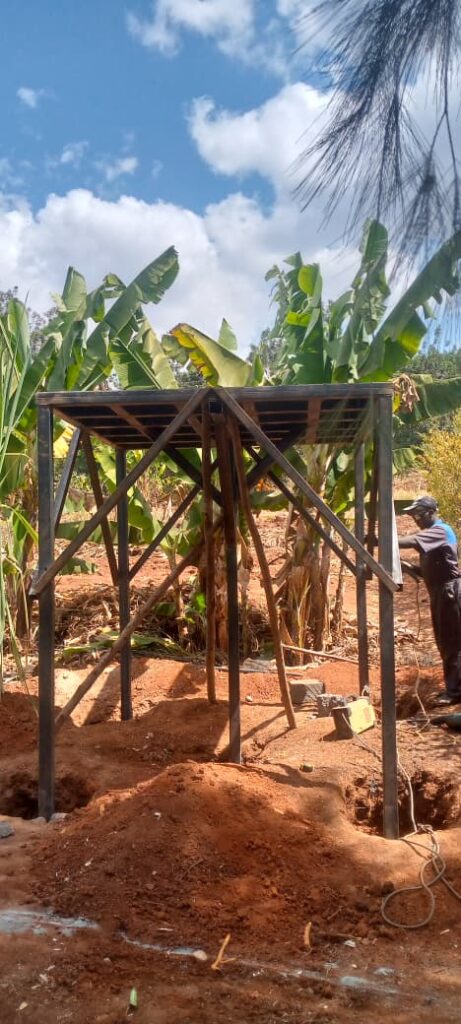
gravity tank stand